

Key takeaways
- AI prototyping hands you a correct screen in minutes; it does not decide who it is for, which moment it fixes or what gets left out.
- Delegate what can be judged from the artefact alone: layout, states, variants and copy in a voice you supply. Keep what needs to know why the work exists.
- A model's default draft is the average of every page it has seen, which makes it correct and generic at the same time.
- On a real brief the AI draft is only the starting point: three written decisions are what turn it into a page that moves a number.
- Before you open any tool, write who, which moment and what is out in three lines, then judge every variant against them.
AI prototyping is the step of design that got cheapest: a model turns a description into a working, plausible screen in minutes. What it does not decide is who the screen is for, which moment it has to fix and what gets left out. Hand the model the building and keep those three decisions. That split is the whole method, and it holds whatever tool you use.
The split has a rule underneath it. If the quality of a piece of work can be judged from the artefact alone, it can be delegated; if judging it requires knowing why the work was asked for, it cannot. That rule is the spine of the product designer's AI workflow, and prototyping is where it gets tested hardest, because a prototype looks finished long before anyone has decided what it is for.
What the model does well, and fast
Start with what to hand over, because the list is longer than many designers admit. Whichever AI prototyping tools you use, they are good at the parts of a prototype you can check by looking:
- Structure: a page skeleton with sensible hierarchy, spacing and responsive behaviour.
- States: empty, loading, error and success, which designers skip under deadline.
- Variants: five layouts of one idea, so you compare instead of defending the first one.
- Copy in a given voice: ten versions of a line once you supply the tone.
- Working flows: clickable enough to watch a person get stuck before engineering starts.
Every item on that list has a quality you can see: a missing error state, a cramped layout, a line that sounds wrong. That is why delegating them is safe. You check the output in seconds and send it back.
The three decisions the model makes for you if you let it
A prototype always contains three decisions, whether or not anyone made them. If you do not write them down, the model fills each one with its default, silently, and hands you a finished artefact instead of a question.
- Who it is for. Not "users", but a person in a situation specific enough to be wrong about: a device, a time of day, a place they arrived from and a reason to leave.
- Which moment it fixes. One of five: getting found, getting understood, being recognised, keeping the customer or knowing why it worked. A page that tries to fix all five fixes none.
- What gets left out. The patterns you refuse even if they would lift a number, because they spoil the promise or recruit the wrong people.
None of the three can be judged from the screen. A centred hero is neither right nor wrong until you know who lands on it, from where, and what they need to believe in the first three seconds. That is why the five fields of a good AI brief are what they are: what the business sells, the number to move, who it is for, what cannot move and how you will know it worked.
Why the default draft is correct and does nothing
The mechanism is simple. A model produces the most probable answer to the description it was given, and the most probable launch page is the average of every launch page it has seen. Averages are competent by construction: nothing is broken and nothing is out of place. They are also generic by construction, because the decisions that make a page belong to one audience are exactly the ones an average removes.
How much that matters depends on how much the screen has to change behaviour. On an internal admin form, where correctness is the whole job, the default is often good enough. On a page that has to make someone act, wait or come back, the default is the problem you were asked to solve, and extra adjectives in the prompt do not fix it: they describe the surface you hope for, not the decision you have not made.
Worked example: the AI draft in the Cassette Futurism brief
The sample brief on Quest is a clean test, because its problem is this article. Cassette Futurism, one of the practice briefs on Quest, is an indie label out of Lisbon that releases six to eight records a year and needs a hero section and email capture for an unreleased single from a rising band. The label generated its landing page with AI, and it feels generic: fans do not feel that anything is coming.
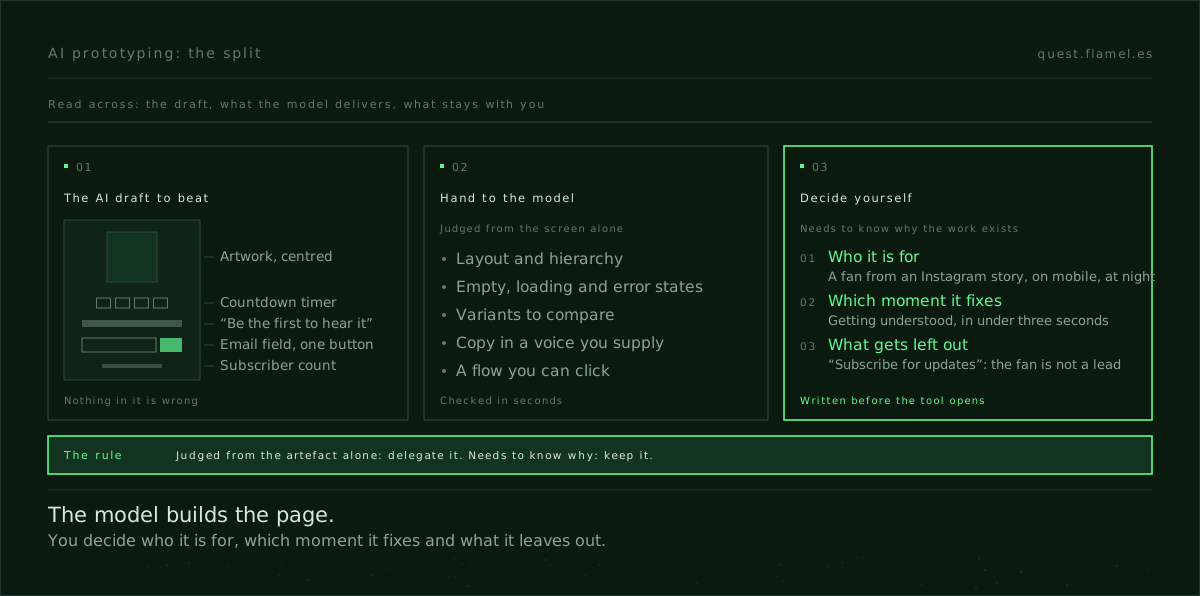
The starting design you are asked to beat is what a model produces by default: a dark hero with the album artwork centred, a countdown timer, the headline "Be the first to hear it", an email field, a count of subscribers and a single button, in a standard centred layout. Nothing in it is wrong. The brief's numbers say it is not working: 70% of visitors land, scroll once and leave, capture sits around 3% on mobile, and the few who sign up rarely open the launch-day email.
Who it is for. The brief names a late-twenties fan who follows five to ten small labels, treats finding a band early as identity, and lands from an Instagram story at night, on mobile, with headphones already on, deciding in seconds. The draft was built for nobody in particular, which is why it reads like every other launch.
Which moment it fixes. Two breaks show in the numbers: the scroll-and-leave is a failure of getting understood, and the unopened launch-day email is a failure of keeping the customer. The brief asks for the first one before anything else: the release moment has to land in under three seconds above the fold. A countdown says when something happens; it does not say what, and a fan with nothing to picture has no reason to wait.
What gets left out. The brand writes its own exclusion: not "subscribe for updates", because the fan is a co-conspirator, not a lead. The draft crosses that line without breaking any rule of layout, since an email field and a subscriber count under a countdown is a subscription form in launch clothes. The brief already holds the replacement. Early fans get a private listening link 72 hours before the public drop, which gives the page a concrete future to promise, and the label shows a growing tribe count on every release page, the same number framed as a circle rather than a list.
What you hand over on this brief, and what you keep
With the three decisions written, the model becomes useful again and the split turns concrete. You keep the promise, the private link said in the first screen. You keep the number: capture on mobile, from about 3% towards the brief's 10%, read next to launch-day opens so that a lift in sign-ups nobody opens does not count as a win. And you keep the exclusions.
You hand over everything that can be judged by looking: hero layouts for a phone held at night, built around the promise rather than the artwork; ten headlines in the label's lowercase, warm, slightly conspiratorial tone, from which you choose one; the form's states and errors; the countdown component; and the launch-day email that repeats the promise in the same words. Each comes back in minutes, and each can be checked against three lines you wrote first.
What AI changes, and what it does not
A model now drafts the whole page for whoever asks, which is why a Quest brief starts from an AI draft rather than a blank canvas: the client already has one. The drawing no longer tells designers apart, and it no longer tells UX, product and growth designers apart either. What separates the work is the call behind the screen.
That is neither a reason to panic nor a reason to relax. Take all of the speed: three honest attempts at the same moment now fit in an afternoon. What speed does not do is make a bad bet good. It makes a bad bet arrive sooner, finished-looking and harder to argue with.
Practise the split this week
Before you open any prototyping tool, write three lines: who this is for, in a situation you could be wrong about; which of the five moments it fixes; and what you will leave out even if it would lift a number. Then generate as many variants as you like and judge each one against the three lines, not against each other.
Run it once on the Cassette Futurism draft: write the three lines, ask a model for five heroes, and keep the one that makes a fan picture the private listening link in under three seconds. The decision this brief turns on is making a future concrete enough to wait for, which is what the anticipation skill trains, with the point where it turns into manipulation marked.
You are a senior product designer reviewing an AI-generated prototype before it reaches the team. Context: [what the product sells], [the person it is for, with device, time of day and where they arrive from], [the moment this screen has to fix: getting found, getting understood, being recognised, keeping the customer or knowing why it worked], [the number it should move and by when], [what must stay out even if it would lift that number], [the voice, with two sample lines]. The draft: [describe or paste the screen]. Do three things. 1) List what in the draft can be judged from the screen alone and fix only those: layout, states, errors, copy in the given voice. 2) List every place where the draft made one of my three decisions for me, and name the default it chose. 3) Propose three variants that each answer the moment differently, with the first-screen promise written out in full. Do not change who it is for or what is excluded.
Frequently asked questions
What is AI prototyping?
AI prototyping is using a model to turn a description into a working, plausible prototype in minutes: layout, states, copy variants and a clickable flow. It removes most of the building. It does not remove the decisions about who the prototype is for, which moment it has to fix and what it leaves out, which is where the product designer's AI workflow draws the line.
Which AI prototyping tools should a designer use?
The tool matters less than the split. Any current tool produces structure, states and variants quickly, and the list of tools changes every quarter. What lasts is the habit of writing who, which moment and what is out before you generate, so every tool's output is judged against the same three lines. How to brief an AI covers the fields that brief needs.
What should I never delegate to an AI prototype?
Anything whose quality cannot be judged from the artefact alone: the audience, the moment the screen answers for, the promise it makes and the patterns it refuses. A model fills those silently with its defaults, which is why its drafts look finished and still read like every other page in the category.
Why does an AI-generated landing page feel generic?
Because a model produces the most probable answer, and the most probable landing page is the average of every one it has seen. Averages are competent and generic at once. The fix is not more adjectives in the prompt; it is a written decision about who lands, what they need to picture and what is excluded, as in the sample brief.





