
Key takeaways
- UX, product and growth designers share the same screens; what separates them is the decision each one answers for when the work ships.
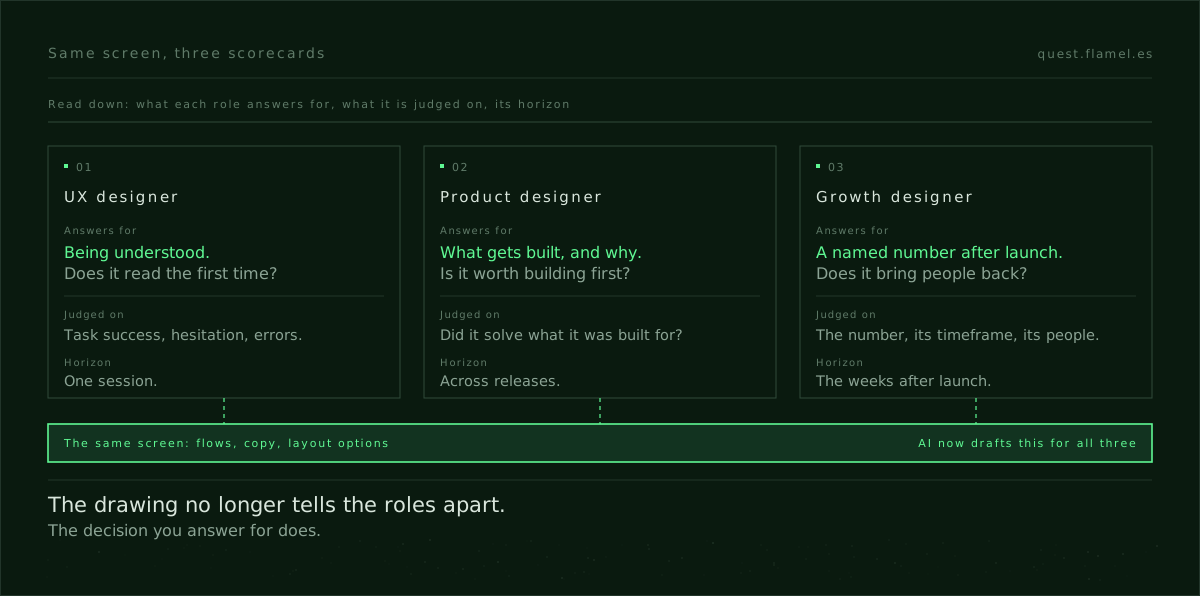
- A UX designer answers for being understood in the moment; a product designer for what gets built and why; a growth designer for a named number after launch.
- Compare the roles on one feature, not in the abstract: same file, three different questions and three different scorecards.
- AI drafts the screen for all three roles alike; the value moves to choosing the question, defending the trade-off and answering for the result.
- To move roles, change what you answer for first: write down the rejected alternative, or give one shipped feature a number, a timeframe and a population.
UX designer vs product designer is not a question about tools or seniority. A UX designer is paid to decide whether people understand what is in front of them. A product designer is paid to decide what gets built and why. A growth designer is paid to decide which moment to fix so a number moves after launch. The screens overlap; the decision you answer for does not.
That used to be a fine distinction, because all three spent most of the week drawing. Now a model drafts a competent screen in seconds, so the drawing no longer tells the roles apart. What is left, and what you are paid for, is the call behind the screen. Here is a map of what each role decides, how to tell which one you are doing this month, and how to move toward the one you want.
Why the three titles blur
Job listings use the titles interchangeably, and so do most teams. The same person can be called a UX designer at an agency, a product designer at a startup and a growth designer on the team that owns sign-ups, while opening the same file every morning. The artefacts are identical: flows, prototypes, specs. That is why comparing them by deliverables goes nowhere, and why most articles on ux designer vs product designer end with "it depends on the company".
It does depend on the company, but not at random. Each title names the question you are accountable for when the work ships. If you have been asking whether it is worth becoming a product designer in 2026, this is the more useful version of that question: not whether the title survives, but which decision you want to be the person who answers for.
The UX designer answers for being understood
A UX designer decides what a person thinks the screen is for, what the words mean, in what order things appear and what happens when something goes wrong. The test is plain: can someone who has never seen this complete the task without help, and where do they hesitate? The evidence is task success, hesitation and errors, usually inside a single session. The horizon is the moment of use.
What the UX designer does not own is whether the feature should exist at all. When the concept is wrong, good UX work says so early and with evidence, instead of polishing a flow nobody needed. That is the line where UX work starts to become product work, and it is where many UX designers already sit without the title.
The product designer answers for what gets built
A product designer decides which problem is worth an engineering cycle, which version ships first and what is cut to make it fit. The work is still visual, but the deliverable that matters is the trade-off: this, not that, for this reason, at this cost. The evidence is whether the thing solved the problem it was built for, judged across releases rather than inside one session.
Product designers spend more time with engineers and product managers than with the canvas, because that is where the decisions live. If your work is mostly wireframes of features somebody else chose, you are doing UX or UI work inside a product team, which is real craft and a good place to learn it. The step up is owning the "why this one first".

The growth designer answers for the number after launch
A growth designer decides which moment of the customer's journey to fix first, and with which lever, so that a named number moves after launch: sign-ups this week, people coming back next month. The role is judged on who finds the page, who understands it, who returns and how anyone knows it worked. In practice it is a product designer who has accepted a number as the scorecard.
That number is a contract, not a target to hit at any cost. Growth work that leans on fake urgency wins a week and loses the trust that makes people come back. The longer version, worked on a live brief, is in what growth design is and what a growth designer does. The short version: you write the number, the timeframe and the people it applies to before you design anything.
The same feature, three questions
The product designer vs ux designer debate goes round in circles when it stays abstract, so pin it to one feature. Take a weekly summary that shows people a pattern in their own data they had not noticed: when they actually spend, sleep or practise. In the Quest skills library that mechanism is called insight, and each role asks it a different question.
- UX designer: does the pattern read in five seconds, and is it hard to misread? Judged on whether people understand it the first time.
- Product designer: is the summary worth building before the export people keep asking for, and what can the data honestly claim? Judged on whether it solved the problem it was built for.
- Growth designer: does the realisation bring people back next week, and how will you know? Judged on how many of the people who saw it return.
Same screen, same file, three scorecards. Most of the friction between these roles comes from people being judged on one scorecard while working to another, and nobody saying so out loud.
What AI changes, and what it does not
A model now drafts the summary screen, the copy and three layout options before lunch, for all three roles alike. That is not a reason to panic and it is not a reason to relax. It moves the value of each role to the part the model does not do: choosing the question, defending the trade-off and answering for the result when it lands.
It is the same shift described in the new design seniority ladder: seniority now reads as how far your decisions reach and who answers for them afterwards. Across all three titles, the strongest portfolios already read this way. They say what was decided, why, and what would have been undone if the number had gone the wrong way.
How to tell which one you are, and how to move
One question sorts it. When the last thing you shipped turned out wrong, whose call was it? If the honest answer is that people misread it, you were in the UX chair. If it was the wrong thing to build first, you were in the product chair. If it worked but nobody came back, you were in the growth chair, whether or not anyone gave you the number.
Moving from UX toward product starts with one feature where you write down the alternative you rejected and why, and bring that to planning instead of the mock-up. Moving from product toward growth starts with something you have already shipped: give it a number, a timeframe and a population, and follow it for two weeks. Neither move needs a new title first.
The quickest way to find out which question you enjoy answering is to answer all three on the same mechanism. Start with the insight skill: it shows one mechanism from the user's side, and the exercise is to decide, in turn, whether it reads, whether it is worth building and whether it brings people back.
I am a designer and I want to know which role I am actually doing: UX designer, product designer or growth designer. Below are my last three projects, with what I shipped and what happened afterwards: [PROJECT 1], [PROJECT 2], [PROJECT 3]. For each project, tell me which decision I answered for: whether people understood it, whether it was the right thing to build first, or whether a named number moved after launch. Quote the part of my description that shows it. Then point out where I made a decision that belongs to another role without owning it, and where someone else made a decision that should have been mine. Finish with one concrete step for my next project that would move me toward [TARGET ROLE], written as a sentence I could say in a planning meeting. Do not give me generic career advice and do not rewrite my projects.
Frequently asked questions
Is a UX designer the same as a product designer?
No, although the titles are often used as synonyms and the daily tools are the same. A UX designer answers for whether people understand and can use what is in front of them. A product designer also answers for what gets built and why, which means trade-offs with engineering and product management across release cycles. Many UX designers already make product decisions without the title.
What does a growth designer do that a product designer doesn't?
A growth designer accepts a named number as the scorecard: sign-ups this week, people returning next month. The work is choosing which moment of the customer's journey to fix first and with which lever, then checking whether the number moved, without fake urgency. The longer version is in what growth design is.
Can a UX designer become a product designer?
Yes, and the move usually starts before the title changes. Pick one feature, write down the alternative you rejected and why, and bring that trade-off to planning instead of the mock-up. When people start asking you what to build first, and not only how it should look, you are already doing product work.
Will AI replace UX designers?
AI already drafts competent screens, copy and layout options in seconds, so a role defined only by producing them is getting smaller. What it does not do is choose which question to answer, defend the trade-off or answer for the result when it ships. That is the part of all three roles worth training, and it is what the new design seniority ladder now measures.





