Key takeaways
- A design engineer designs in code, so the interface they hand over is the one users get, not a file someone else rebuilds.
- AI cut the cost of building; the scarce part now is deciding what deserves to exist and proving it worked once it ships.
- The job lives where a file can't reach: states, timing, accessibility as behaviour, and when a one-off becomes a component.
- The defining call is native or new: borrow the interaction grammar users already know and spend novelty only where it earns its cost.
- You don't need servers or infrastructure; learn the platform's building blocks and enough code to judge what a model wrote.
A design engineer is the person in a digital product team who designs in code: what they hand over is the interface users get, not a file someone else rebuilds. On Google the same title mostly means mechanical or hardware engineering; this is the software role. AI made the building half of that job cheap, and that is exactly why the role is growing.
It is also why the question you are probably asking, whether to move into it, has a more useful answer than yes or no. The role is not a promotion and not an escape hatch. It is a different place to stand in the same argument: who decides what the interface does, and who can show it worked.
What the role is, once you strip out the tools
Two definitions circulate. One says it is a front-end developer with taste; the other says it is a designer who learned to code. Both describe a toolset, and neither describes the job. The job is closing the distance between a decision and its evidence, and code happens to be the shortest route between the two.
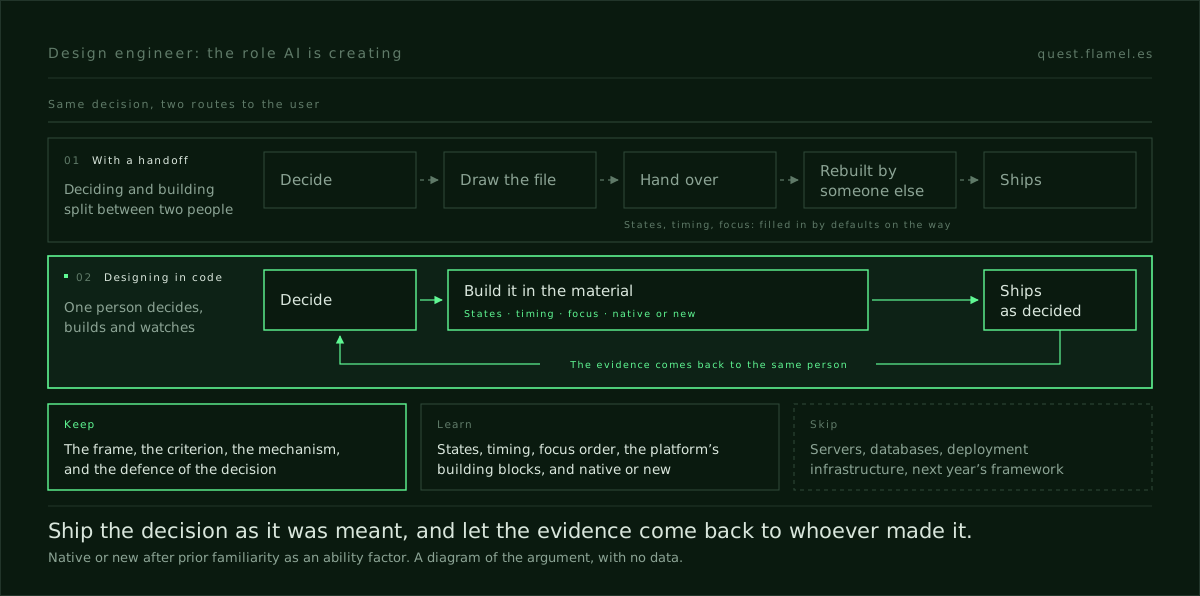
A file describes an interface. Code behaves like one. A mock cannot show what the screen does while the data is loading, what happens to the layout when a surname is twice as long as the one in the design, where keyboard focus lands after an error, or how long a panel takes to open. In a shipped product those are most of what the user experiences, and in a handoff they are exactly the things filled in with defaults by someone who was not in the room when the decision was made.
So the role is judged on one thing: whether what reaches the user is the decision as it was meant. Not the handoff, not the polish of the file, not lines of code.
Why AI is creating the role instead of removing it
For a long time building was the expensive half. Teams split deciding and building between two people because one person rarely had time for both, and they accepted the handoff as the price. The handoff was where intent leaked: the designer filed bugs about spacing, the engineer guessed at the states nobody drew, and both called the result a compromise.
Code assistants changed the price of the building half. Not to zero, and not to correct by default, but far enough that a designer who can read code can get a working version of their own decision in an afternoon. When building gets cheap, the scarce thing is no longer the ability to build. It is knowing what deserves to be built and proving it worked, the same shift running through the whole field: craft became available on demand, and judgement did not. That is why the role is growing rather than shrinking.
What the job asks for, week to week
Less than the listings suggest, and something different. The work clusters around four things a file cannot hold:
- States, not screens. Empty, loading, partial, failed, too long, too many. In code you cannot skip one: the screen will do something, and it is either what you chose or whatever the default was.
- Timing. How long a transition takes, what moves first, when feedback appears after a tap. Motion is not decoration here; it is how the interface tells someone that what they did worked.
- Accessibility as behaviour. Focus order, what a screen reader announces, where the keyboard goes next. You do not specify these at the end. You set them while you build, or they are set for you.
- The system. Deciding when a one-off becomes a component everyone else uses, and when it should stay a one-off because it solves a problem nobody else has.
Notice what is missing: nothing on that list is about producing more screens. Each item is a decision the user will feel, made in the material where it will actually live.
What you keep if you move
Almost everything that made you good as a product designer comes with you. Naming the mechanism that is supposed to change someone's behaviour, defending a decision with its reasoning attached, and directing a model instead of racing it are the three skills that appreciate as the models improve, and the move makes all three sharper.
Directing the machine stops being an occasional exercise and becomes the day, because a code assistant is now your main collaborator. Defending a decision gets easier, because you can show it working instead of describing it. And naming the mechanism becomes testable: if you named the right one, what you shipped will move the behaviour you said it would. The vocabulary for that is finite, and the skills library lays it out one mechanism at a time.
What you give up is the comfort of the handoff. When the build is yours, there is nobody downstream to blame for the state that went missing.
Native or new: the call that defines the role
Cheap building has a trap in it. When a custom date picker, a bespoke gesture or a reinvented dropdown costs one prompt to generate, inventing starts to feel free. It is not. Every new pattern is something the user has to learn, a keyboard and screen-reader path the platform had already solved and you now solve again, and code somebody maintains for as long as the product lives.
The skill underneath the call has a name: prior familiarity as an ability factor. People expect your product to work like the ones they already use, and the learning they did elsewhere is ability you get to borrow. Visual identity can be original at very little cost; interaction grammar cannot. A good design engineer is boring in the right places, and spends novelty only where a new pattern does something the familiar one can't.
That condition is real, not a loophole. Convention is the wrong default when the established pattern is genuinely bad for the task, or when it encodes a business model the product exists to reject. Then the new pattern earns its cost, and your job is to build it well enough that nobody notices they had to learn it.
What is not worth learning
The fear that stops most designers is the size of engineering. You do not need most of it. Databases, servers, deployment infrastructure and the framework that will be replaced next year are real crafts, and they are someone else's seams. The model writes their boilerplate well, and you will rarely be the one asked to own them.
What is worth learning is narrower and deeper: the platform's own building blocks (on the web, semantic HTML and modern CSS layout), how a component holds state, and enough fluency to read what a model wrote and say what is wrong with it. The rule from splitting the work between you and the model applies to code without translation: if a piece can be judged from the artefact alone, delegate it; if judging it needs the reason it was asked for, it stays with you. Boilerplate passes that test. The behaviour of the screen never does.
Should you move into it?
Move if the handoff frustrates you more than the code intimidates you, if you enjoy working in the material, and if your team will let a designer merge changes into the product. Without that last condition the title is a ticket queue with a design label on it, and you will spend your days implementing other people's decisions instead of shipping your own.
Stay where you are if you want to avoid code entirely; that is a legitimate answer, and the judgement half of the job is still the whole job. But you do not need the title to borrow the loop. The next time a decision of yours is about to be handed over, build the one state most likely to get lost, in the real material, before it goes.
Where to start
Pick a decision you made in the last month that shipped differently from how you meant it. Find the moment where the difference crept in, usually a state nobody drew or a default nobody chose, and rebuild that one moment in code, with a model doing the typing and you doing the deciding. Then put it next to what shipped. If the comparison makes you want to do it again, the role is probably yours. And if the question underneath this one is still open, whether product design is worth it as a career at all answers it without the reassurance and without the funeral.
Act as a reviewer of one interface decision of mine before it ships. The decision and why I made it: [decision and reason]. The screen or component it lives in: [describe it, or paste the code]. Platform: [web, iOS or Android]. Do four things, in this order. First, list every state this interface can be in (empty, loading, partial, failed, too long, too many) and for each one tell me whether my design decides it or leaves it to a default. Second, describe the feedback a user gets after each action and flag any moment where nothing tells them it worked. Third, walk the keyboard and screen-reader path and say where focus lands after an error. Fourth, for every custom pattern in it, name the familiar platform pattern it replaces and say whether the new one does something the familiar one cannot. Do not redesign anything. End with the single state most likely to get lost in a handoff and the one question I should answer before building it.
Frequently asked questions
What is a design engineer?
A design engineer is a designer in a digital product team who works in code, so the interface they hand over is the one users actually get. The role covers what a static file cannot hold: states, timing, accessibility and the component system. It is not the mechanical or hardware design engineer that most search results describe.
Is a design engineer the same as a front-end developer?
They share tools but not what they answer for. A front-end developer is usually judged on building what was specified, and building it well; a design engineer is also judged on whether the decision itself was right and reached the user intact. The role owns the behaviour of the interface, not the servers and infrastructure behind it.
Do I need to learn to code to become a design engineer?
Yes, but less of it than most designers fear. Learn the platform's building blocks, how a component holds state, and enough fluency to judge what a model wrote. Servers and deployment can stay with engineers, and the rule for splitting the work between you and the model applies: delegate whatever can be judged from the artefact alone.
Is AI replacing design engineers?
No; AI is what makes the role reachable for more designers. Code assistants made the building half cheap, so the scarce part is deciding what deserves to exist and proving it worked. Those are the skills that appreciate as the models improve, and the role uses all three every day.