Key takeaways
- UX strategy is an order, not a document: which customer moment you fix first, the number that says it worked, and what would change the order.
- Decide by moment and by number, not by the screen that bothers you most. The loudest screen is often downstream of the real leak.
- Three questions set the order: where the number says it leaks, which fix makes the other worth more, and which change you can read in time.
- On the Doorstep brief the first week goes before the paywall, because the wall can only promise what the first week delivers.
- Write the order as one sentence with a condition that would reorder it, and say it before anyone opens a design file.
UX strategy is the order in which you fix the moments of a customer's journey, and the argument that holds that order up: which moment goes first, the one number that tells you it worked, and the result that would make you change the order. It is not a document. It is decided by moment and by number, not by the screen that bothers you most.
A strategy is an order, not a document
Most definitions of UX strategy list the ingredients: a vision, goals, research, a roadmap. All of them are useful, and none of them tells you what to do on Monday. A list of ten good improvements is a backlog. The strategy is the sentence that says which one goes first, why the other nine wait, and what you would need to see to reshuffle them.
The test is simple. If a colleague asks why this comes before that and you can answer with something other than taste, you have a strategy. If the honest answer is that this screen annoys you, you have a preference. Preferences are not always wrong, but they lose to whoever brings a number.
Order by moment, not by screen
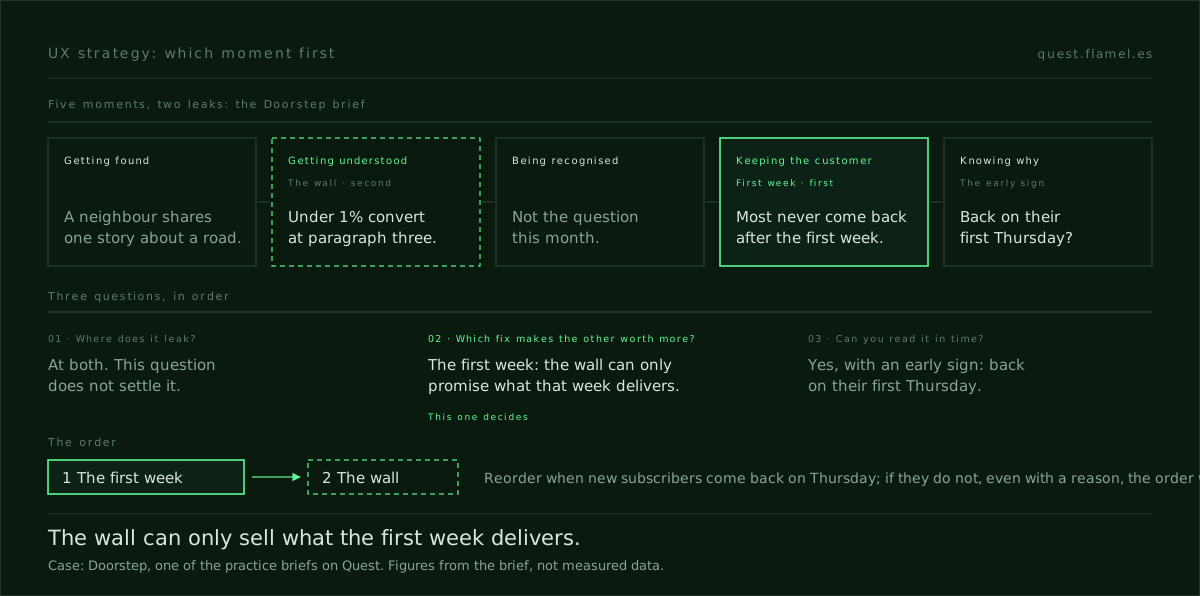
Screens are the wrong unit, because the same screen can serve different moments and the moment decides what success means. The five moments in one number per customer moment make a workable map: getting found, getting understood, being recognised, keeping the customer and knowing why. Each has a question and a number that answers it, so they can be compared on the same terms.
Instead of the checkout against the onboarding, which is an argument about pixels, you compare two leaks: how many people one moment loses and how many the other loses. That is an argument about evidence, and evidence can settle it. Each moment is then moved by a mechanism, and the Quest skills library lists them with what each one should change and what to measure.
Three questions that set the order
Once each moment has its number, three questions decide which one goes first. Ask them in this order, because each can overturn the answer to the one before.
- Where does the number say it leaks? Put the moments side by side and find the one losing the most people relative to what it should keep. That is the starting candidate, not the answer.
- Which fix makes the other worth more? Moments are chained. A fix upstream pours more people into any leak downstream, while a fix downstream makes every later gain upstream count. The fix that multiplies the other goes first.
- Can you read it in time? A change you cannot measure inside the window you have is a bet you cannot settle. If the first choice cannot show an effect for months, find an earlier sign that it is working, or swap the order.
Write the result as one sentence with a condition attached: this moment first, because of this number and this dependency, until this result tells us to reorder. The condition is what turns an opinion into a strategy, and it tells you when to stop defending the order and start changing it.
Worked example: the wall or the first week
Doorstep is one of the practice briefs on Quest: a four-person newsroom that covers a single postcode, funded entirely by reader subscriptions, with no advertising. Almost all of its traffic is one story shared in a neighbourhood WhatsApp group. The reader is on a phone, has never heard of the newsroom and will not create an account to read. They came because the story was about a road they use.
Two moments are visibly broken. At paragraph three the article fades behind a gradient and a modal asks the reader to support local journalism for £7 a month, with two plan buttons and a Maybe later link. Under 1% convert. And most of the few who do subscribe never come back after the first week. The brief asks for both: a wall and a first week that turn one story into a habit.

Every instinct says the wall goes first. It is the screen everyone sees, it looks bad, and its plea is exactly the generic line the brief's own tone rules out. It is the screen that bothers you most, which is the reason to slow down before you pick it.
Why the first week goes before the wall
The first question does not settle it. Under 1% at the wall and most subscribers gone after week one are both bad numbers, at different moments. The wall is getting understood: a stranger working out in seconds what this is and why it is theirs. The first week is keeping the customer.
The second question does. A better wall pours more people into a first week that loses most of them, and in a neighbourhood that talks in a WhatsApp group, each one who leaves has learned that Doorstep is another subscription they forget to cancel. That is the pain the brief names. Fixing the first week first means every reader the wall later wins is a reader who has a reason to stay.
There is a deeper reason. The wall's plea is generic because nothing behind it has been defined. Until the team knows what brings a new subscriber back on Thursday, the wall has nothing concrete to promise, so it asks for support instead. The first week is where that promise gets made. The wall can only sell what the first week delivers.
The third question is the honest objection. Under 1% means fewer than one subscriber for every hundred readers who reach the wall, so any change to the first week is read on a small group. The answer is an early sign rather than a renewal: whether a new subscriber comes back on their first Thursday. It shows within a week for each person, and it is the knowing-why number for the whole order.
Say it as one sentence with a condition
The strategy fits in a line you can say at planning: the first week goes first, because the wall can only promise what that week delivers, and success is the share of new subscribers who come back on their first Thursday. It has the shape of the sentence in how to defend a design decision: what changes, the mechanism that should move it, and when you will know.
Then comes the condition that reorders it. Once new subscribers come back on Thursday, the binding leak moves to the wall and the wall moves up, with something specific to ask for at last: this street, this week, a reason to return. If they do not come back even with a reason, the problem is not the rhythm, and the order was wrong.
The wall will need a mechanism of its own when its turn comes, and the brief points at one. A reader who finishes the story about their road can realise they are already someone who follows what happens on their street. That is a moment of insight, a truth about themselves the reader trips over, which no plea about local journalism can produce.
If the room still wants the wall first, do not argue it as taste. Turn the disagreement into a bet, with a check that settles it and a rule for reverting, the move described in what to do when the PM overrules your design. Either order can be defended. What cannot be defended is an order nobody wrote down.
What a model will not decide for you
The threat is real, and it is not the one usually named. A model will not replace the designer of the wall. It will produce so many good walls that the team ships one before anyone asks whether the wall was the right place to start. Cheap screens make the order worth more, not less, because fixing the wrong moment now costs a month of well-made work pointed the wrong way.
The skill that answers it is ordering by moment and defending the order with a number. This week, take the product you work on and write one number next to each of the five moments. Pick the first moment with the three questions, write the sentence and the condition that would reorder it, and say it at planning before anyone opens a design file. The method for that sentence, and the four objections it meets, is in how to defend a design decision.
You are a senior product designer helping me decide the order of my UX work for the next month. Ask me, one at a time, for: [the product and who uses it], [the number I have today for each of five moments: getting found, getting understood, being recognised, keeping the customer and knowing why], [the screen I most want to fix] and [how long I have before the next review]. Then give me: 1) the moment where the numbers say it leaks most; 2) which fix would make another moment's fix worth more, and why; 3) whether I can read the first fix inside my window and, if not, the earliest sign I could read instead; 4) the order as one sentence in the form "[moment] first, because [number and dependency], until [result] tells us to reorder"; 5) the result that would prove the order wrong. If the screen I most want to fix is not in the first moment, say so plainly before anything else.
Frequently asked questions
What is UX strategy, in one sentence?
It is the order in which you fix the moments of the customer's journey and the argument for that order: which moment goes first, the number that says it worked and the result that would change the order. A document can hold it, but the strategy is the order, not the document.
What is the difference between a UX strategy and a UX roadmap?
A roadmap lists what will be built and when. A strategy says why the first item is first, using the customer moment it fixes and the number that proves it, and it names what would reorder the list. A roadmap without that argument gets rebuilt every time someone senior has a new favourite screen.
How do I decide which customer moment to fix first?
Give each moment one number, then ask three questions in order: where the number says it leaks most, which fix makes another fix worth more, and which change you can read inside the time you have. The second question usually decides it, because moments are chained and a fix upstream pours people into any leak downstream.
Is there a UX strategy framework I can use on my own?
The three questions are the framework, and they fit on a sticky note. Pair them with one number per customer moment and write the result as a single sentence with a condition that would reorder it. You do not need a workshop or anyone's permission to do it on the product you already work on.
What if my team wants to fix a different moment first?
Treat it as a bet, not a debate about taste. Write both orders with their numbers, agree on the result that would settle it and on a rule for reverting, as in what to do when the PM overrules your design. Either order can be defended; an order nobody wrote down cannot.